
Solving the right problem in the right place
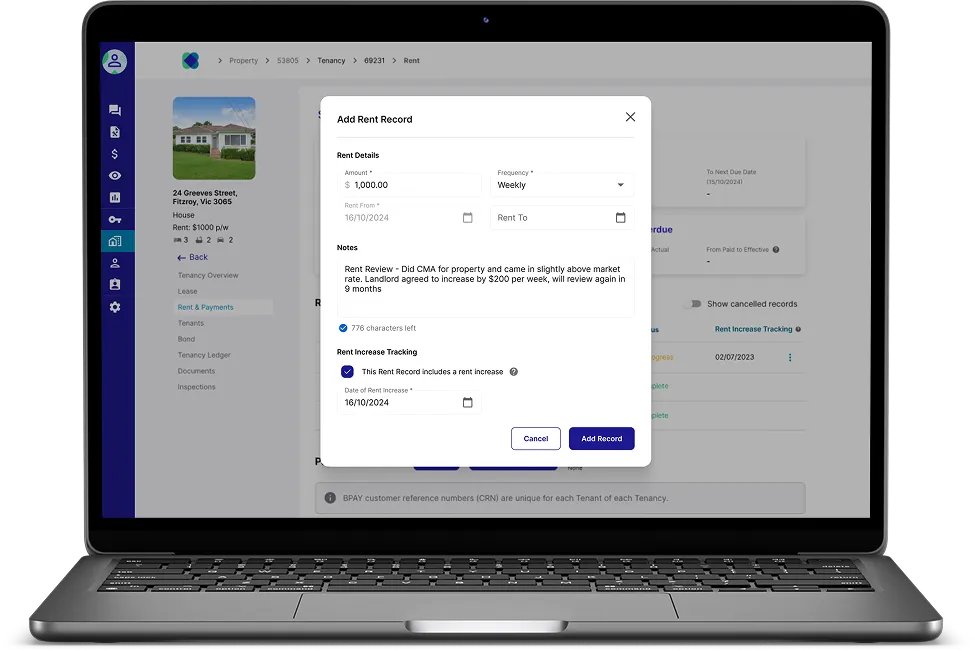
Early adoption was strong, within the first two weeks:
59%
1,262
+14%
Overview
I led the design of a rent increase tracking workflow for Kolmeo (B2B Property Management SaaS), turning an off-platform compliance workaround into an integrated product experience.
My role focused on shaping the product direction, using discovery and testing to steer the team away from a lean but behaviourally weak MVP, and aligning stakeholders around a solution that fit existing rent administration behaviour.
The feature reached 59% account adoption within 14 days.
My role: Product Designer
Collaborators: PM, Solution Architect, Tech Lead, BA, Customer Success, Engineers, QA
Scope: Discovery, product direction, interaction design, testing, stakeholder alignment, GTM support
The problem
Property managers were managing rent increase tracking in spreadsheets because Kolmeo did not provide a clear way to track when rent was last increased, when it should be reviewed next, or how that information should be reported.
This created operational risk for customers and product risk for Kolmeo. A compliance-critical workflow was happening outside the platform, which meant teams were relying on manual processes, duplicated data entry and disconnected reporting.
This wasn’t simply a missing feature. It was a product gap shaping customer behaviour.
What changed the direction
Early discovery showed that property managers did not think about rent increases as part of lease management.
They saw them as part of day-to-day rent administration.
That insight changed the direction of the work. If the workflow was placed too far away from where rent changes were already managed, it risked becoming another feature users had to remember to maintain.
Designing for adoption, not just release
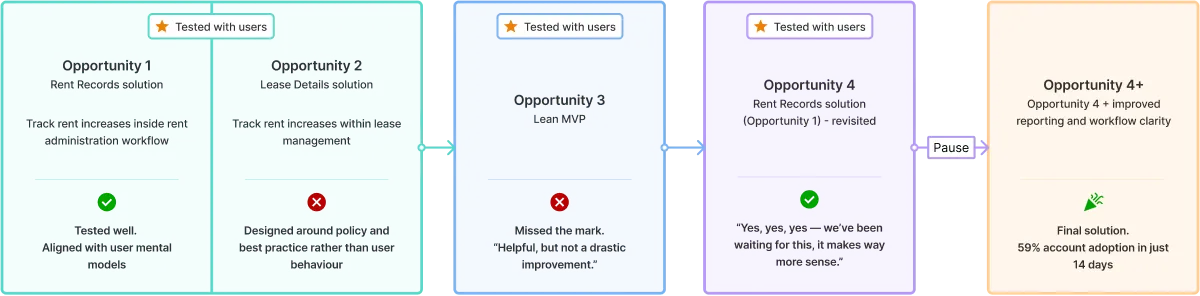
With that insight, we explored several directions across lease management, rent records and a lean standalone MVP.
The key tension was speed to release versus likelihood of adoption. A lean MVP was appealing because it could release value quickly, but testing showed it didn’t feel meaningfully better than the spreadsheet process users already had.
Users described the MVP direction as:
“Helpful, but not a drastic improvement.”
That feedback clarified the product decision: the goal was not to release the leanest feature, but to identify the smallest experience that could realistically change behaviour.
The strategic pivot
Based on user testing, I advocated for revisiting an earlier direction that embedded rent increase tracking directly into Rent Records.
Opportunity 4 worked because it turned Rent Records into the natural home for both rent increase history and upcoming review dates.
”Yes, yes, yes — we’ve been waiting for this. It makes way more sense.”
The stronger direction was not more functionality. It was placing the right prompts, dates and review actions inside the rent workflow users already trusted.
At the same time, engineering constraints meant we couldn’t build the full end-state experience immediately. That meant the first release needed to focus on the behaviours most likely to move the workflow back into Kolmeo: capturing the right dates in Rent Records, surfacing them where compliance decisions happened, and triggering the next review workflow.
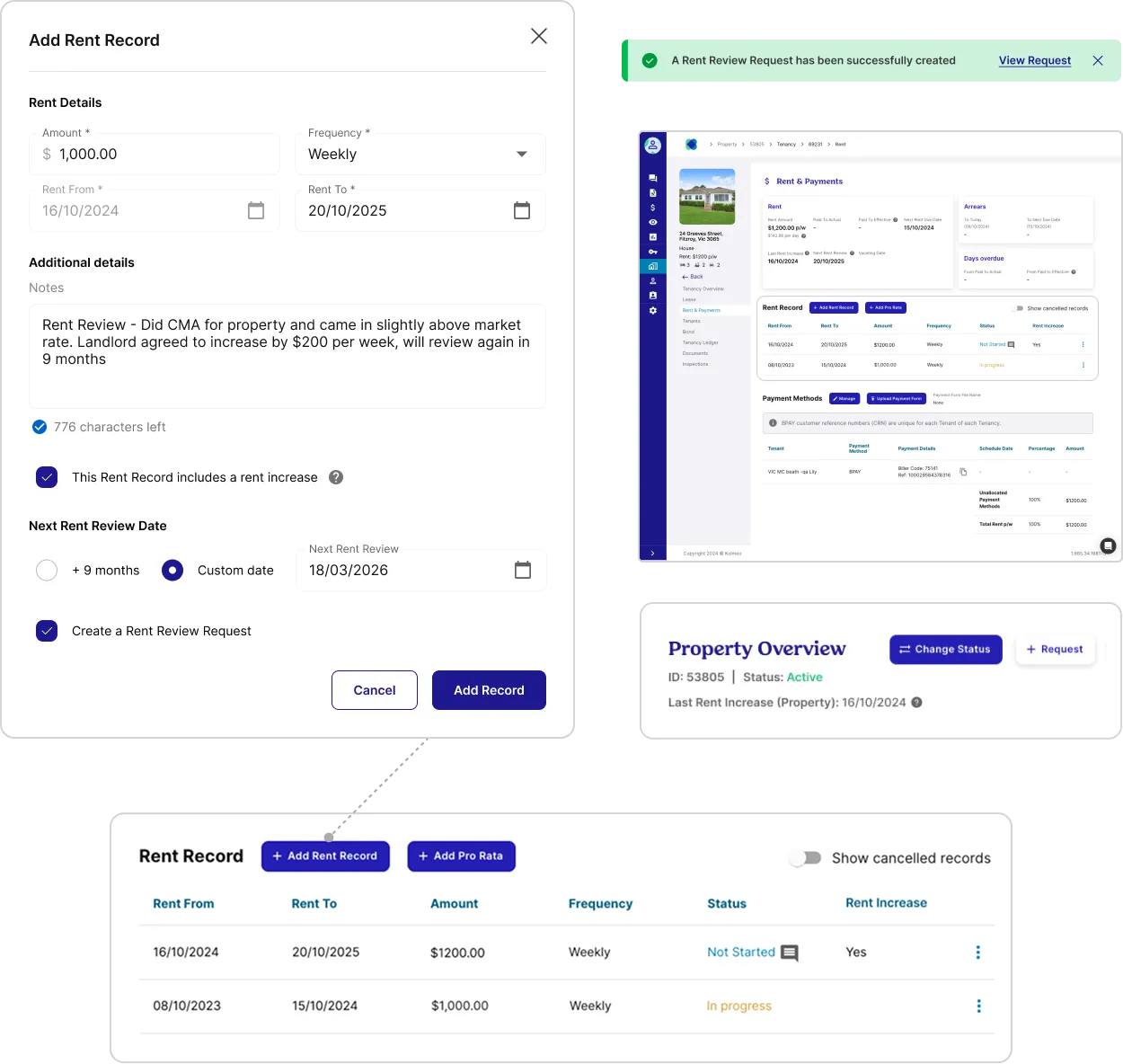
One action updated multiple workflow touchpoints: Rent Records, next review date, property-level compliance visibility and rent review request creation.
Navigating the release challenge
Late in delivery, new stakeholder concerns surfaced just before release.
Rather than allowing late-stage feedback to become a debate about whether to stop or push ahead unchanged, I reframed the discussion around evidence, risk and what needed to be true for a successful launch.
We made a deliberate call to pause the release, not to reopen the direction, but to strengthen the areas that would give teams more confidence at launch.
At final playback, the greater risk had become continued internal debate without new evidence. I helped move the group from seeking absolute confidence before launch to making a measured product decision based on validated behaviour, clear success signals and a safe path to learn post-launch.
My recommendation was clear:
“Let’s release it. Let’s track performance. Then iterate based on real usage.”
The outcome
The final experience connected rent increase history, next review dates, compliance visibility and review request creation into one rent administration workflow.
Property managers could record a rent increase in Rent Records, surface the last increase date for Queensland compliance, manage the next review date independently, trigger a rent review request and reduce the need for separate spreadsheet tracking.
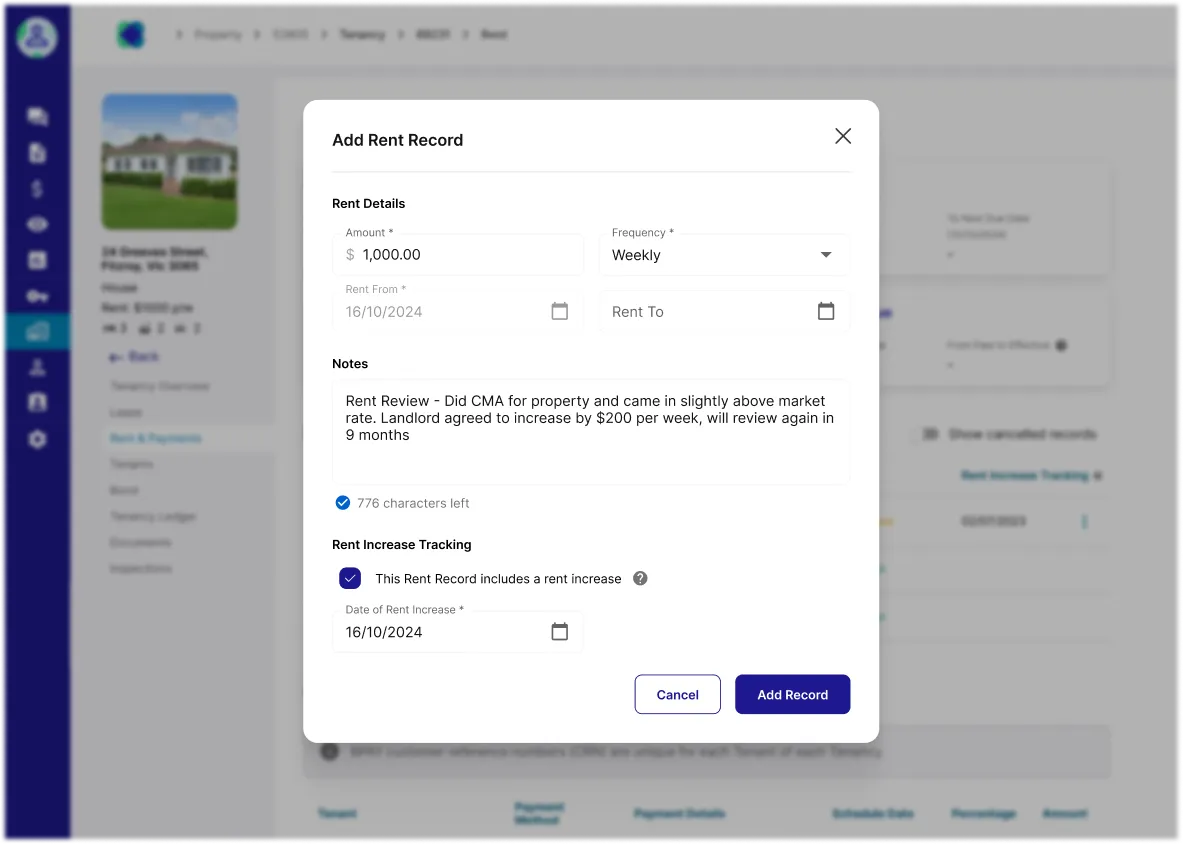
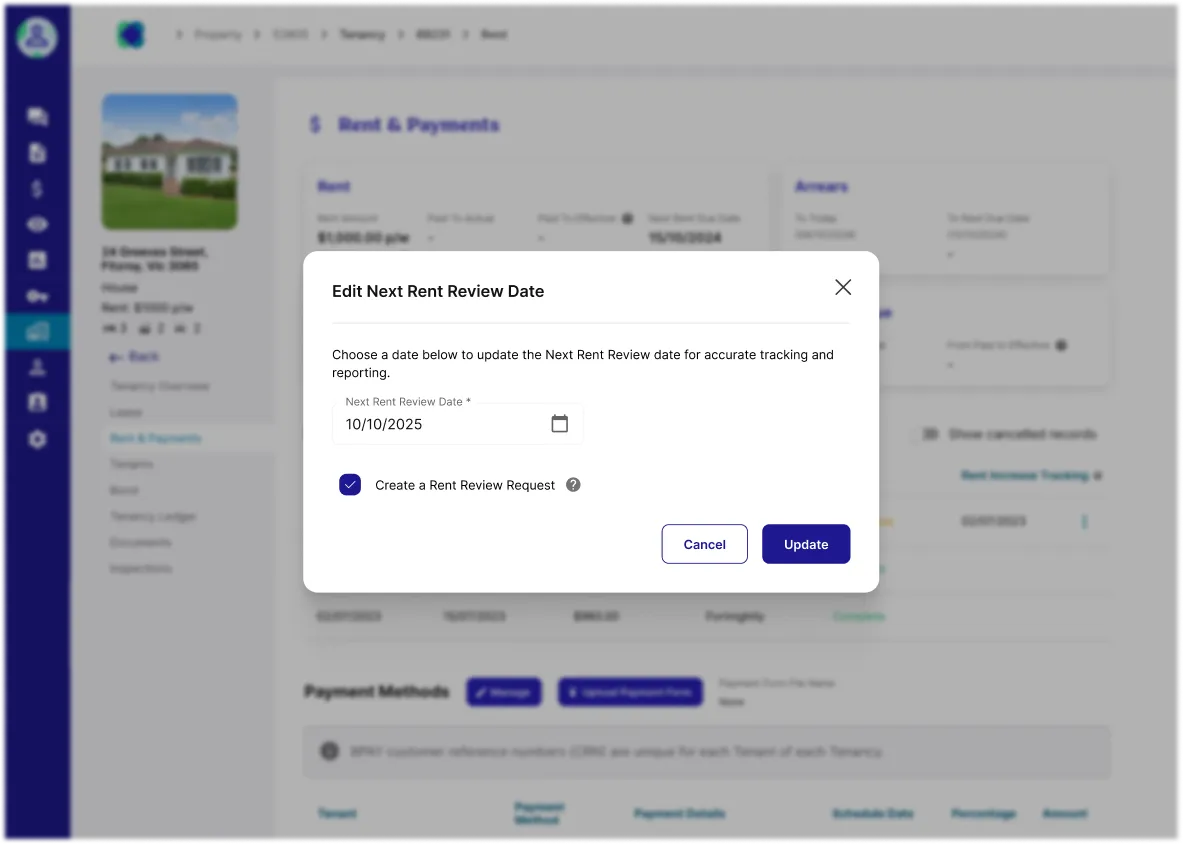
The solution was simple by design. Rather than introducing another place to manage rent reviews, we changed where the work happened — moving critical compliance activity out of spreadsheets and back into the part of Kolmeo property managers already relied on daily. That shift made the product more useful immediately, while giving the team a stronger foundation to improve visibility, automation and workflow support over time.