
When trust mattered more than functionality
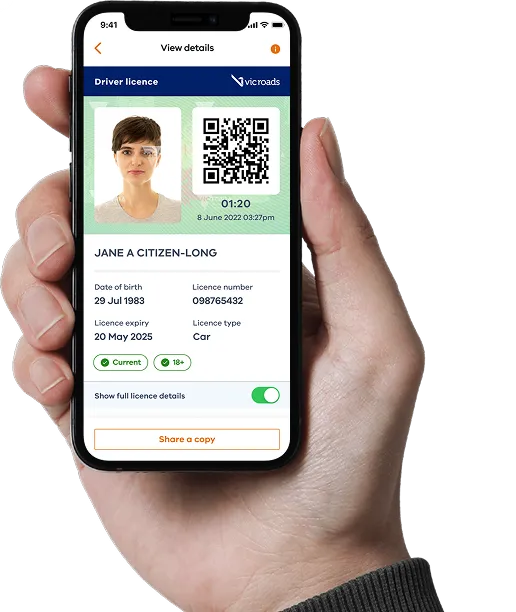
Impact
1.8M+
1.5M+
323K+
Overview
I worked on the Digital Driver Licence experience for Service Victoria, helping reimagine a physical licence as a trusted digital product people could understand, present and verify with confidence.
I helped shape the verification experience by planning research, exploring interaction models and using usability findings to influence stakeholder decisions. A key part of my role was balancing what users expected in a real identity check with the government and infrastructure constraints behind the service.
The success of the product depended less on digitising a physical card and more on helping people trust a new form of digital identity in real-world moments where identity mattered.
My role: UX Designer / Product Designer
Collaborators: PM, PO, Solution Architect, Lead Product Designer, iOS and Android Engineers, QA
Scope: Research planning, concept exploration, interaction design, stakeholder alignment and design validation
The problem wasn’t digitisation. It was trust.
Early conversations focused on functionality: how people would share their licence, what information they could choose to show, and what new capabilities a digital experience could unlock.
Research revealed a more fundamental challenge. People were not evaluating the licence as a set of features; they were evaluating whether it would be accepted, understood and trusted in real-world moments where identity mattered.
One participant captured the behavioural shift clearly:
”I don’t go anywhere without my phone, but I do go out without my licence.”
That insight moved the design focus from functionality to confidence. The experience needed to feel familiar enough to trust, clear enough to present, and simple enough for someone else to verify in the moment.
Designing around existing mental models
Rather than reinventing how identification worked, we focused on understanding how people already expected a digital licence to behave.
Verification became the clearest test of those expectations. If users could not quickly understand how to present the licence, the digital experience would feel less trustworthy, regardless of how much functionality it offered.
I explored two verification directions and recommended surfacing the QR code directly on the licence screen because it aligned with how participants expected to present and prove their licence.
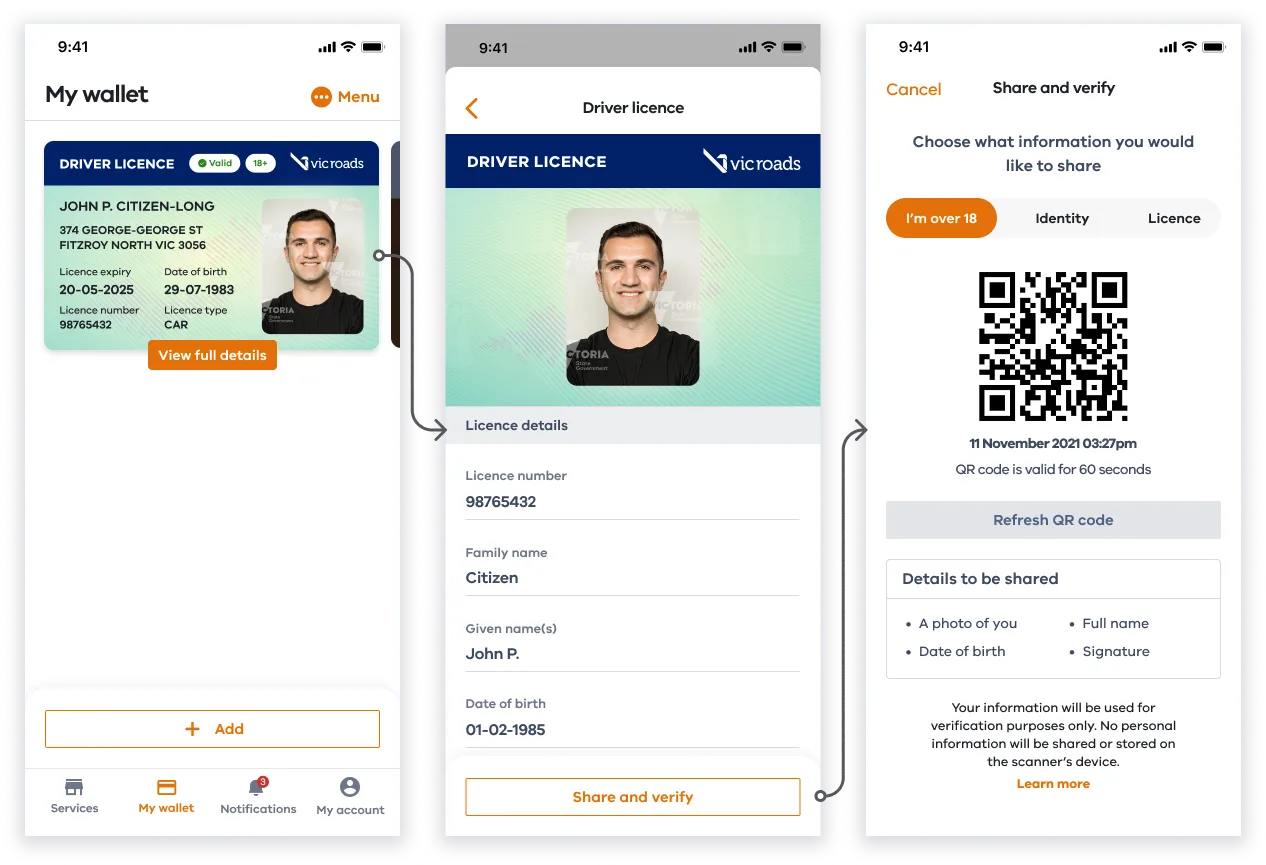
Direction 1 placed verification behind a separate Share and Verify screen.
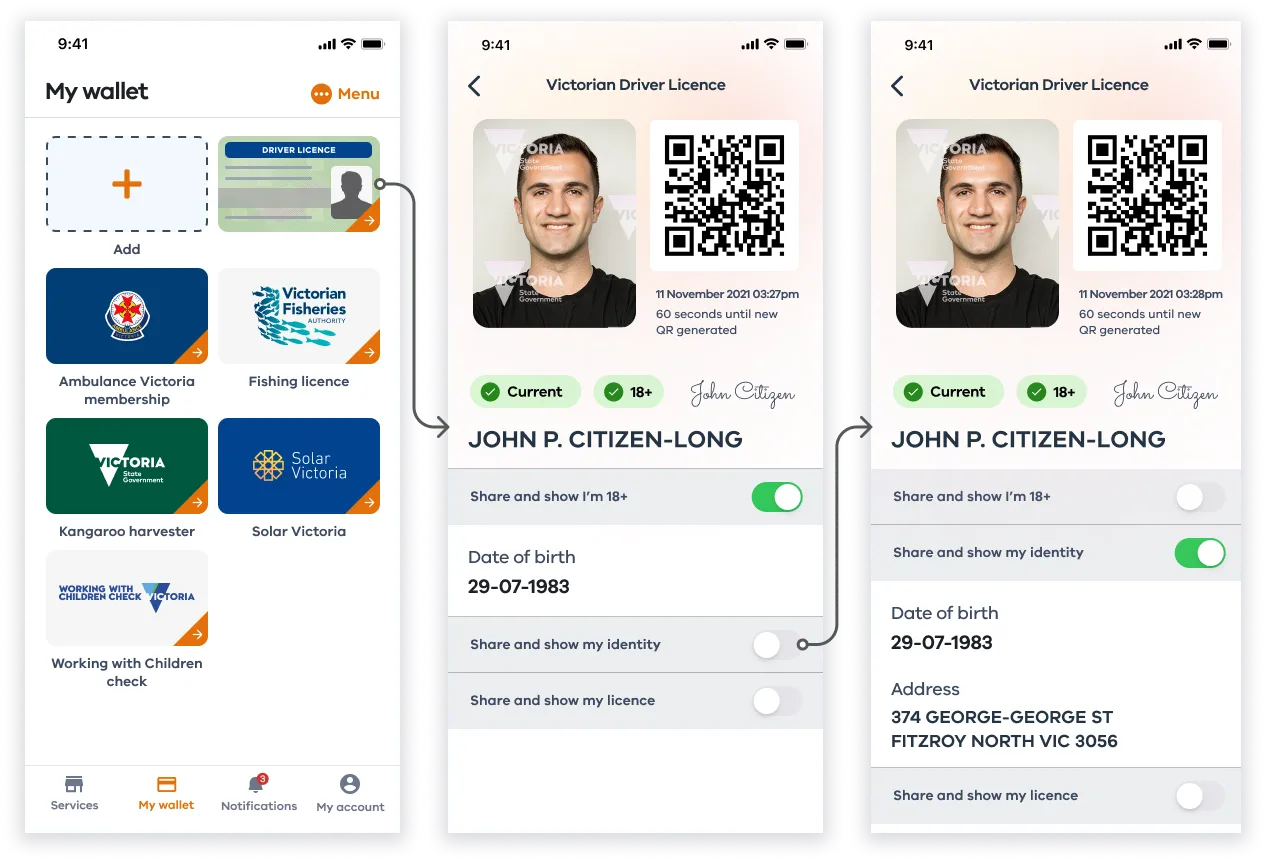
Direction 2 placed the QR code directly on the main licence screen, making it immediately accessible.
The initial product direction favoured a separate Share and Verify screen. This reduced the risk of unnecessary licence validity checks and helped manage potential load on VicRoads infrastructure, but it also introduced friction into the moment users expected verification to be immediate.
Rather than accepting the decision as final, I continued gathering evidence through usability testing.
Testing consistently showed the same pattern: participants gravitated to the main licence screen and expected verification to be immediately available. When the QR code was separated from the primary experience, they hesitated, needed more guidance and felt less certain about the process.
I used these findings in stakeholder playback to challenge the existing direction and advocate for a verification experience that better aligned with users’ expectations, while still acknowledging the infrastructure concerns behind the original decision.
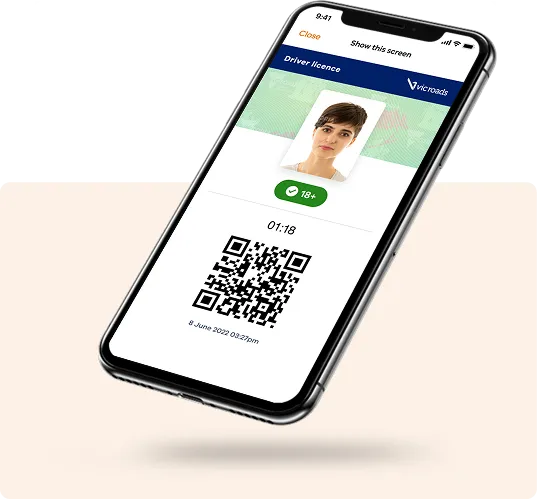
Usability testing gave us the evidence to revisit the initial Share and Verify direction. The final experience made verification faster and easier to understand by placing the proof point where users expected it: on the licence itself. It reduced unnecessary steps and increased confidence that the digital licence could work in real-world identity checks.
Designing for two audiences
One of the key challenges of the Digital Driver Licence was that it needed to work for both the person presenting their licence and the person verifying it.
For licence holders, the experience needed to feel familiar, private and easy to control. For police officers, venue staff, businesses and other third parties, it needed to feel legitimate, scannable and easy to validate.
Every interaction needed to build confidence on both sides of the exchange, because the product only worked if both audiences trusted it in the moment.
The outcome
The final experience gave Victorians a digital licence that felt familiar, easy to present and simple to verify.
By preserving existing identity behaviours and making verification immediately understandable, the product supported a smoother transition from physical card to a digital form of identity.
Today, the Digital Driver Licence is used by more than 1.8 million Victorians, with over 1.5 million licences added to the Service Victoria app and more than 323,000 active users.
Its adoption shows the value of designing digital identity around existing behaviours rather than asking people to relearn how identification should work.
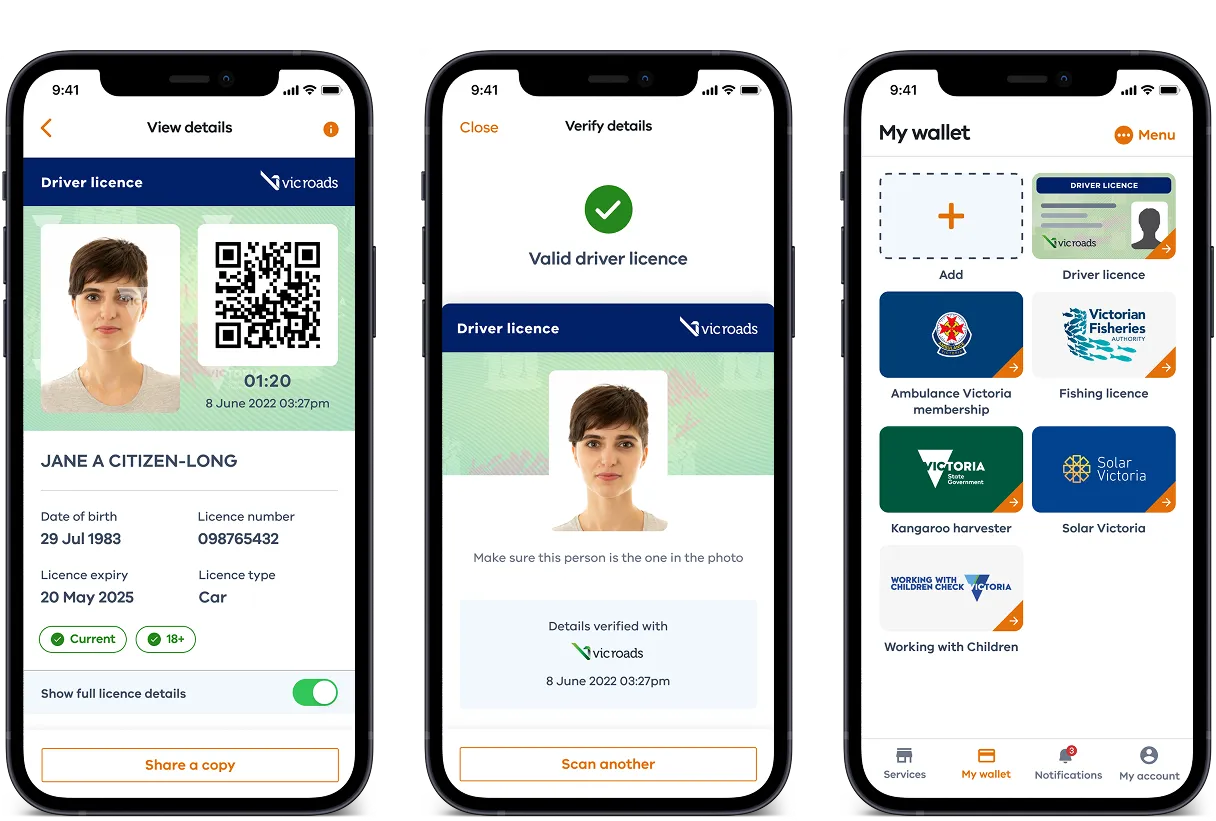
Licence presentation, verification and wallet access worked together as one familiar flow, supporting adoption at statewide scale.
Key takeaway
Rather than reinventing the driver licence, we preserved the mental models people already trusted and used technology to make identification simpler, faster and more accessible.
The success of the work came from treating trust as the core product requirement, not a layer added after the experience was designed.